
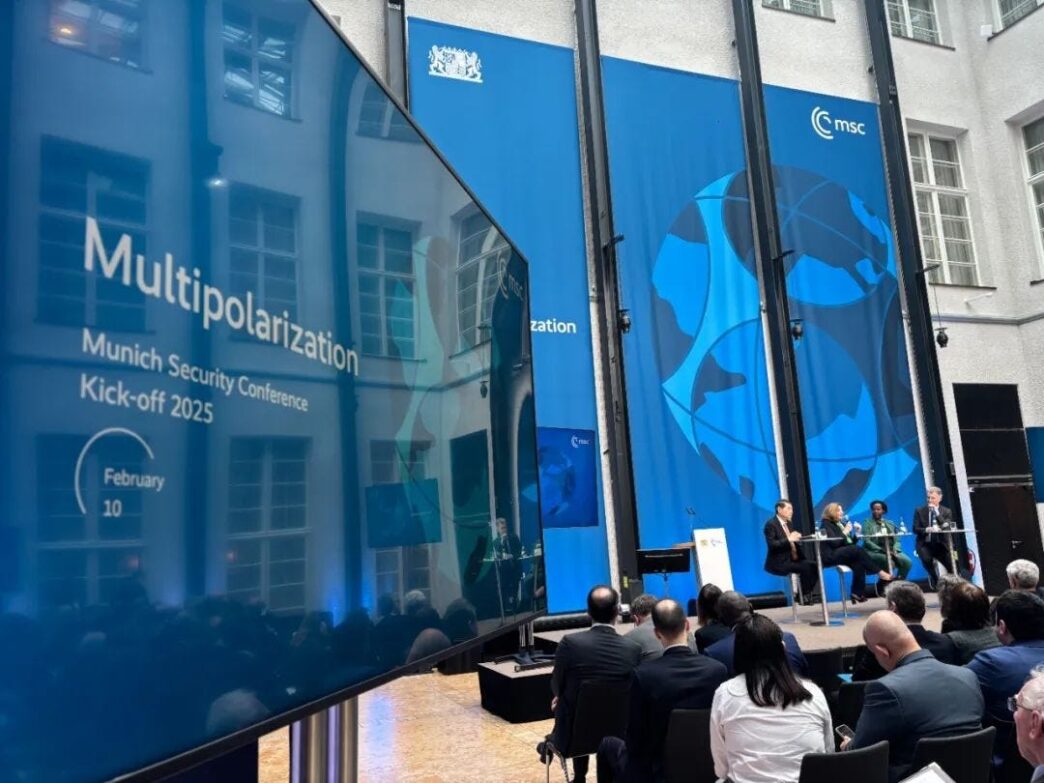
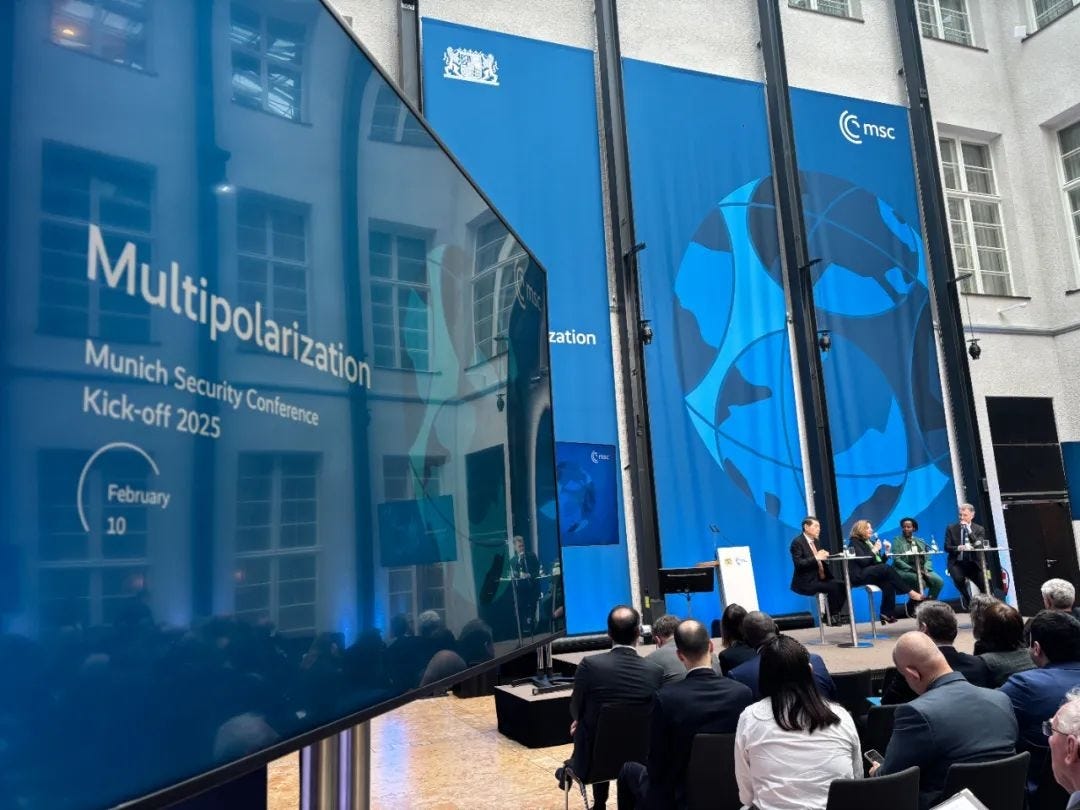

Previously: We explored how multipolarization has ended predictability for global business.
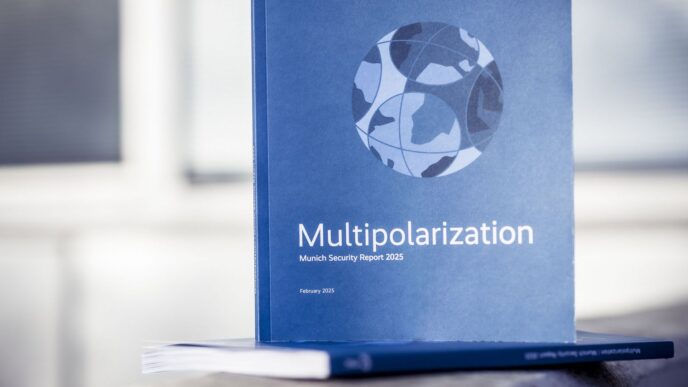
The Munich Security Conference’s 2025 Report describes a world no longer governed by universal rules but by overlapping, sometimes competing, frameworks. For businesses that once thrived under the assumption of a rules-based global order, this fragmentation presents a fundamental challenge. Trade regimes are diverging, standards are politicised, and regulation has become a frontline instrument of power.
The Erosion of the Rules-Based Order
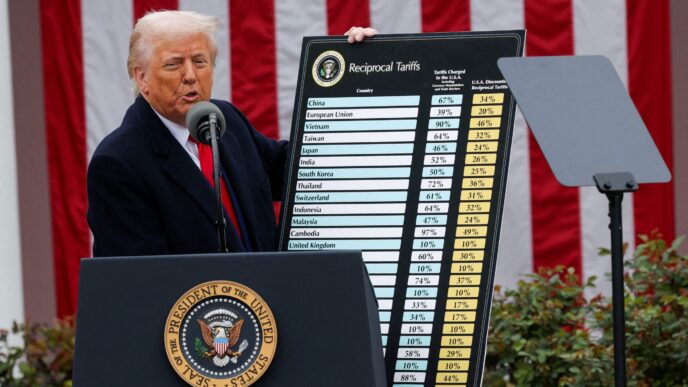
For decades, the World Trade Organization provided a common framework. Disputes were arbitrated, tariffs disciplined, and globalisation flourished. That foundation has cracked. The report underscores how the paralysis of the WTO and the rise of competing regional blocs have created a patchwork system. Today, companies face a maze of bilateral agreements, regional compacts, and unilateral measures.
This is not simply regulatory inconvenience. Fragmented trade rules are being used deliberately to advance strategic objectives. Export controls on semiconductors, carbon border adjustment mechanisms, and competing digital privacy laws all reflect the same reality: trade policy is now an arena of geopolitical contestation.
Divergent Standards, Higher Costs
One of the most visible impacts is regulatory divergence. Instead of a single set of standards enabling scale and efficiency, multinationals must now comply with multiple, often incompatible regimes.
- Digital Governance: The EU’s GDPR model has become a global reference point, but the US, China, and emerging markets are asserting their own frameworks. A company operating across jurisdictions must reconcile conflicting obligations on data storage, cross-border flows, and algorithmic transparency.
- Climate and ESG: Europe’s Carbon Border Adjustment Mechanism (CBAM) introduces costs for exporters to the EU, while other jurisdictions resist or develop their own systems. Similarly, ESG reporting standards diverge – Europe’s CSRD, the US SEC’s evolving rules, and voluntary global frameworks create compliance complexity.
- Technology Exports: Semiconductor firms now face restrictions that vary not just by product but by end-user and geography. Export controls, licensing, and investment screening are becoming routine features of doing business.
The net effect is rising compliance costs, supply chain disruption, and strategic uncertainty. What once was the hidden plumbing of globalisation has become a central business risk.
The Weaponisation of Interdependence
The report highlights how states have moved from promoting interdependence to exploiting it. Access to markets, resources, and technologies is now conditional on political alignment. Russia’s manipulation of gas flows, China’s use of rare earth dominance, and Western restrictions on advanced technology exports are only the beginning.
For businesses, this means that neutrality is increasingly untenable. Firms may be forced to choose sides – or at least to restructure operations so that exposure to any one bloc is limited. Even consumer markets are politicised: being perceived as too close to one jurisdiction can damage reputation and revenues in another.
Corporate Adaptation: From Global Scale to Multi-Regulatory Strategies
The practical question for executives is how to operate profitably in this environment. The answer lies in recognising that the age of seamless global scale is over. Instead, companies must adopt multi-regulatory strategies:
- Localisation of Supply Chains: Reshoring, near-shoring, and friend-shoring are no longer temporary trends but structural adjustments. Companies are diversifying production and sourcing to avoid exposure to a single jurisdiction.
- Modular Compliance: Rather than building one global system, firms are developing modular approaches to compliance, tailored to specific markets. This reduces efficiency but allows flexibility when regulations shift.
- Strategic Engagement: Companies are investing in government relations and industry coalitions to influence emerging standards. In a fragmented order, those who shape the rules early gain lasting advantage.
- Scenario Planning: Boards are stress-testing strategies against regulatory shocks – new tariffs, export controls, or sudden sanctions. Contingency planning is now a fiduciary responsibility.
Opportunities Amid Fragmentation
Fragmentation is not only a burden. It creates opportunities for companies that can adapt quickly.
- First-Mover Advantage in Standards: Firms that align early with stringent regimes like the EU’s ESG reporting can set benchmarks that competitors will struggle to match.
- New Market Access via Alliances: Regional blocs, such as ASEAN or the African Continental Free Trade Area, are asserting themselves. Companies that understand and invest early in these frameworks can secure privileged positions.
- Resilience as Brand Value: Demonstrating compliance, transparency, and ethical conduct across diverse jurisdictions can strengthen trust with regulators, investors, and consumers alike.
Governing Complexity
Fragmented trade and regulation are here to stay. The rules-based order has not disappeared, but it has splintered into competing architectures that reflect the multipolar reality of global politics. For business leaders, the imperative is clear: treat regulatory fragmentation not as administrative overhead but as a strategic variable.
This means investing in foresight, modular compliance, and political intelligence. It means recognising that efficiency gains from global uniformity have given way to resilience gains from flexibility. And it means viewing engagement with regulators not as an afterthought but as a core driver of competitiveness.
In a multipolar world, the ability to navigate divergent rules is not just a compliance challenge. It is a source of strategic advantage.
Next: We turn to security, analysing how cyber threats, disinformation, and supply chain sabotage are becoming routine business risks.