
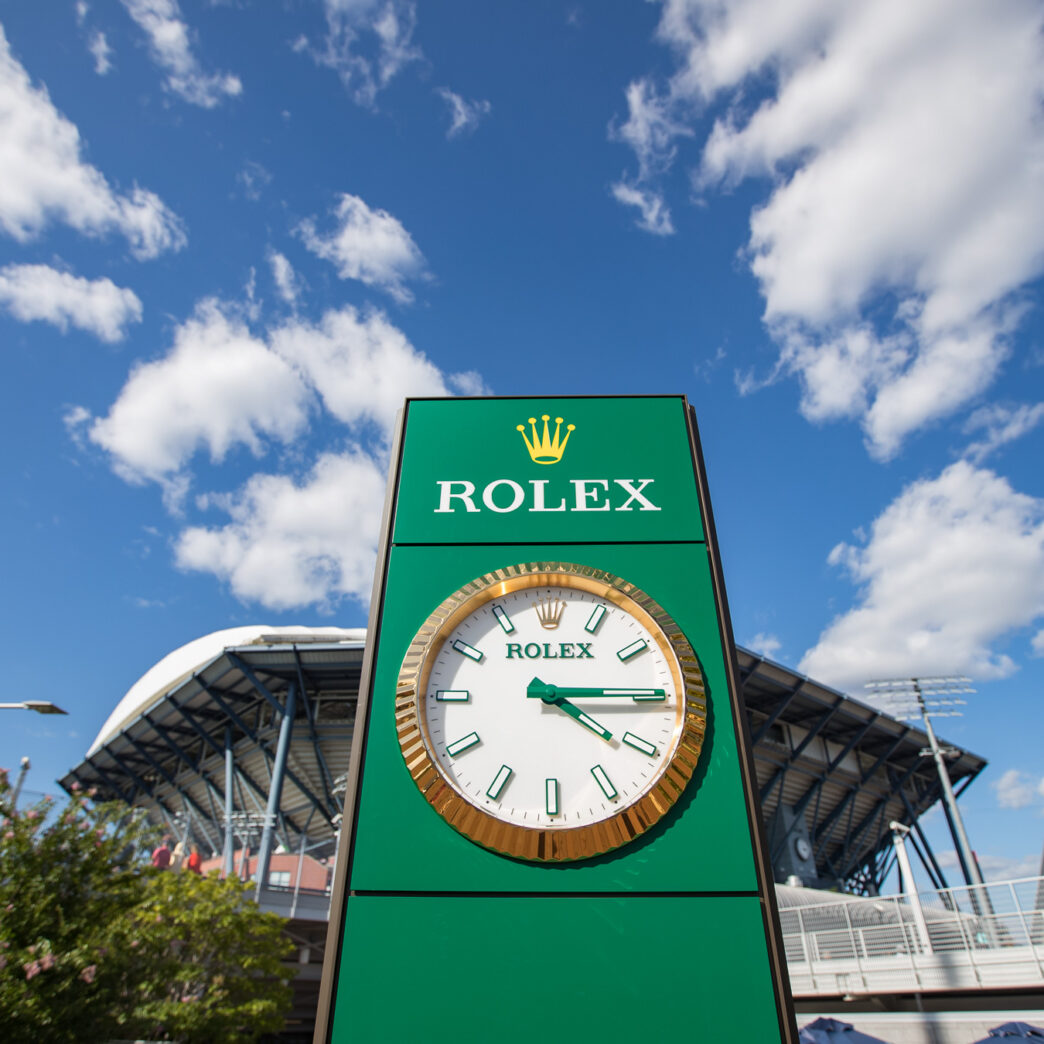
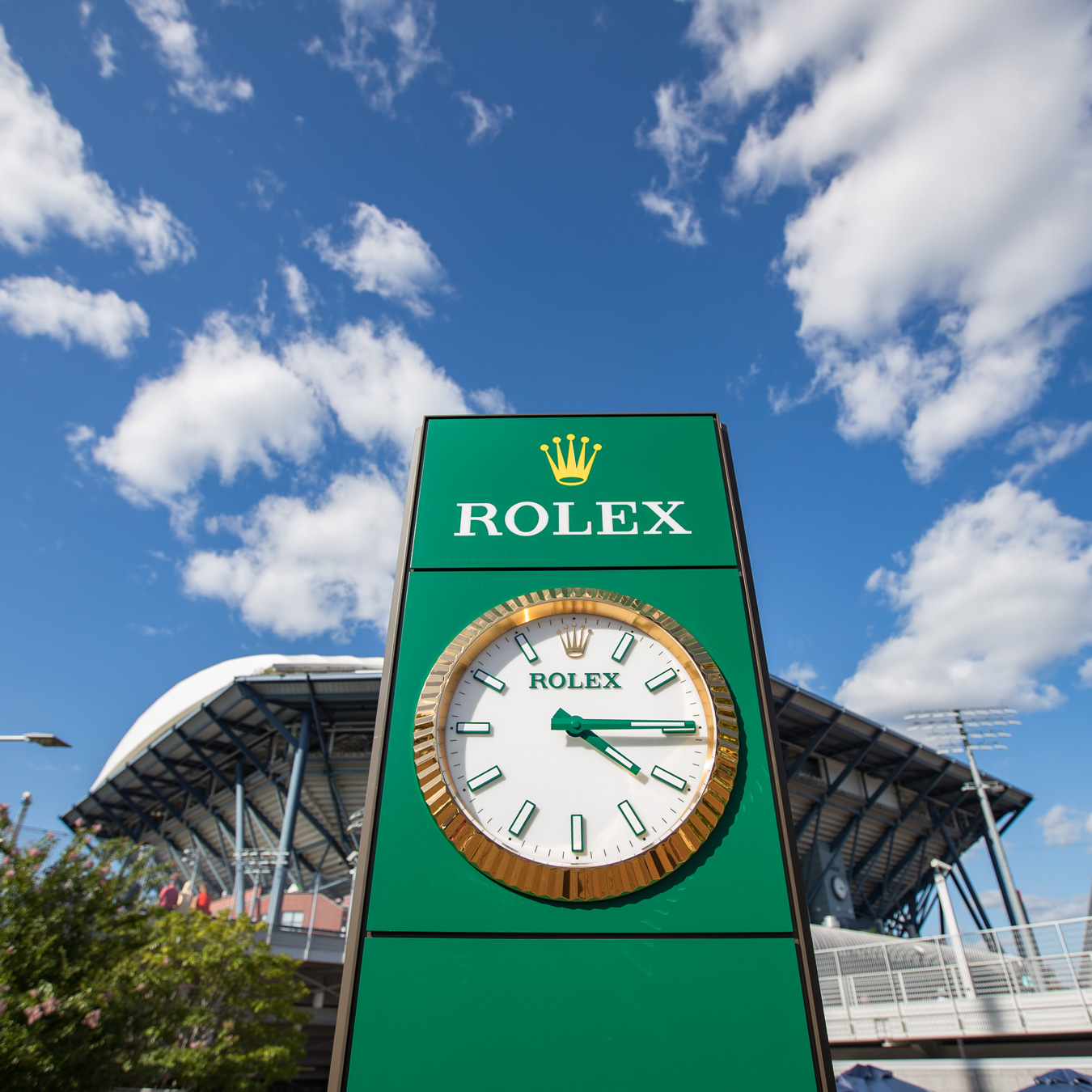

In September 2025, Rolex found itself at the centre of an unexpected political storm. As a long-time sponsor of the U.S. Open Tennis Championships, Rolex extended an invitation to President Donald Trump to attend the men’s final in its VIP box – a gesture consistent with its tradition of hosting prominent guests.
The timing, however, proved highly sensitive. Only weeks earlier, the Trump Administration had imposed a 39% tariff on Swiss watches, a move that threatened to squeeze Rolex’s U.S. sales and profits. The image of Trump sitting in Rolex’s suite alongside senior members of his Administration quickly attracted media attention and sparked questions about whether the company was seeking to influence U.S. trade policy in its favour.
Senator Elizabeth Warren publicly challenged Rolex’s decision, sending a letter to the company’s Geneva headquarters accusing it of “curry[ing] favour” with the President in pursuit of tariff exemptions. She linked Rolex’s actions to a broader pattern of corporate leaders allegedly using access and gifts to secure special treatment from the Administration.
Although Rolex’s invitation was issued weeks before the tariffs were announced, the juxtaposition of trade tensions, political optics, and luxury hospitality propelled the company into a partisan debate in Washington. What for Rolex was intended as a gesture of sporting sponsorship suddenly became a reputational risk with global visibility.
The Political Flashpoint
Senator Elizabeth Warren’s intervention transformed what could have been a passing media story into a full-fledged political flashpoint. In her letter, she framed Rolex’s hospitality as part of a troubling pattern: corporations leveraging personal access to President Trump in hopes of winning favourable tariff treatment. She cited examples of other CEOs – Apple’s Tim Cook and Nvidia’s Jensen Huang – whose relationships with the President were alleged to have yielded tangible trade benefits and suggested that Rolex may have been pursuing a similar strategy.
The allegations quickly became a story not about tennis or sponsorship, but about ethics, influence, and corruption. Media outlets amplified the narrative, focusing on the stark image of Trump seated in Rolex’s luxury box while his Administration’s tariffs threatened the company’s bottom line. The presence of senior White House officials, including the Treasury Secretary and Chief of Staff, only reinforced suspicions that the invitation carried political overtones.
For Rolex, the risk was not only reputational but also geopolitical. As a Swiss company, it had little direct influence over U.S. trade policy, yet it now found itself portrayed as a participant in the very kind of transactional politics that Warren was campaigning against. The situation highlighted how international businesses can become political symbols – used by American politicians to illustrate larger points about corruption, trade wars, and inequality.
Rolex’s Response
Faced with Senator Warren’s detailed accusations, Rolex opted for a strategy of measured transparency and nonpartisan positioning. Although, as a Swiss company, it was under no obligation to respond to a U.S. senator, Rolex CEO Jean-Frédéric Dufour issued a written reply “as a matter of courtesy and goodwill”. The letter contained several key elements:
- Clarification of intent: Dufour stressed that Rolex’s invitation to President Trump was consistent with its long-standing role as a sponsor of the U.S. Open. Hosting dignitaries and public figures, regardless of political affiliation, was presented as a tradition rooted in the celebration of sport and international friendship – not a political act.
- Facts over perceptions:
- Trump had been invited weeks in advance; the timing was not linked to tariff announcements.
- The President chose his own entourage; Rolex had no role in selecting which officials attended.
- Gifts were minimal – a sweater and gilet provided to Trump personally.
- Conversations during the match were described as informal and focused on tennis. No discussions on tariffs, trade policy, or exemptions took place.
- Separation from politics: Dufour underscored that Rolex was not engaged in lobbying on tariff matters. Such discussions were the responsibility of Swiss authorities, not individual companies. This distancing reinforced Rolex’s neutrality and its avoidance of political entanglement.
- Values-based framing: The letter closed by reaffirming Rolex’s identity as a brand committed to sport, tradition, and nonpartisan goodwill, deliberately steering the narrative away from politics and back to core brand values.
This approach balanced the need to address Warren’s concerns with the importance of not becoming further enmeshed in partisan debate. By choosing dignified, factual, and restrained language, Rolex sought to contain reputational damage while demonstrating respect for the political process.
Lessons for International Companies
The Rolex case offers clear lessons for multinational corporations navigating highly charged political environments, particularly in the United States:
- Anticipate Politicisation: Even neutral gestures, such as hospitality at a sporting event, can be reframed as political acts. Companies should assess how their actions may look when filtered through a partisan lens, especially in election years or during trade disputes.
- Maintain Nonpartisan Neutrality: Rolex’s emphasis on sport and international friendship demonstrates the value of anchoring corporate activities in themes that transcend politics. By positioning itself as apolitical, the company signalled consistency with its global brand values.
- Document Decision-Making: Maintaining detailed records of invitations, guest lists, and associated costs provides evidence against claims of impropriety. Rolex’s reference to the dated invitation letter strengthened its credibility in the face of scepticism.
- Separate Business Interests from Political Optics: By stressing that tariff negotiations were the responsibility of the Swiss government, Rolex avoided the appearance of lobbying. Companies should ensure that brand-building activities are clearly distinct from regulatory or trade discussions.
- Respond with Measured Transparency: Silence risks fuelling suspicion, while overreaction can inflame tensions. Rolex’s strategy – a voluntary, courteous, fact-based response – shows how to engage constructively while maintaining dignity and avoiding escalation.
Broader Implications
The Rolex case underscores a broader reality for global corporations: in the United States’ febrile political climate, multinationals are increasingly at risk of becoming symbols in partisan battles. What a company perceives as routine sponsorship or corporate hospitality can be recast by politicians or the media as evidence of influence-peddling, corruption, or partisanship.
Three wider implications emerge:
- Multinationals as Political Symbols: Foreign companies, particularly those with luxury or iconic brands, are highly visible and therefore vulnerable to being used as examples in political arguments. Rolex became a proxy in debates not only about tariffs, but about corporate ethics and presidential influence.
- The Power of Optics: In political risk management, perception can matter more than intent. Even when no lobbying takes place, the juxtaposition of Trump in Rolex’s box amid tariff tensions created a powerful narrative. Companies must anticipate how visuals, guest lists, and timing can shape interpretation.
- The Need for Political Optics in Risk Planning: Reputation and issues management now requires a deliberate focus on optics risk – planning not only for what is done, but for how it may appear. This includes scenario testing (e.g., “How would this look if a senator accused us of impropriety?”) and building communication strategies in advance.
Conclusion
The Rolex episode illustrates how even a gesture rooted in tradition and sponsorship can be reframed as political manoeuvring in today’s polarised environment. A Swiss luxury brand that sought only to host a global sporting event found itself accused of influence-peddling and corruption in Washington, D.C.
Rolex’s response – courteous, transparent, and firmly anchored in nonpartisan values – helped it navigate the storm. By clarifying facts, distancing itself from political lobbying, and reinforcing its brand identity as a supporter of sport and international friendship, the company contained reputational risk and avoided deeper entanglement.
For other multinational companies, the lesson is clear: in the United States, politics is inseparable from perception. Optics matter as much as reality, and corporations must prepare for their actions to be scrutinised, reinterpreted, and weaponised. The ability to respond with dignity, documentation, and neutrality is not optional – it is an essential component of modern risk and issues management.