

The 2025 Munich Security Conference report makes one conclusion unavoidable: we have entered the age of multipolarization. Power is no longer concentrated in Washington or split neatly between Washington and Beijing. Instead, it is dispersed across a shifting landscape of states, regions, and non-state actors. For business leaders, this is not abstract geopolitics. Multipolarization changes the rules of the game. Global trade regimes are splintering into competing standards. Supply chains are vulnerable to coercion and sabotage. Cyberattacks and disinformation campaigns are routine instruments of statecraft. Legitimacy is no longer granted by governments alone but contested across NGOs, digital platforms, and local communities. The implications are profound. Predictability has evaporated. Neutrality is harder to sustain. Resilience and adaptability are now competitive advantages, not just defensive shields. Over the coming days, Risk&Issues will publish a five-part series unpacking what multipolarization means for corporate strategy. We will explore the end of predictability, the fragmentation of trade and regulation, the new security risks facing companies, the rise of corporate diplomacy, and the leadership agenda for boards and executives. This series is designed to equip business leaders not just to survive in a fragmented world, but to lead.
The Munich Security Conference’s 2025 Report identifies “multipolarization” as the defining feature of today’s international order. Unlike the relative clarity of the Cold War’s bipolarity or the brief “unipolar moment” of US dominance, the 2020s are marked by a proliferation of power centres, shifting alliances, and unpredictable alignments. For business leaders, this is more than a geopolitical observation – it is a fundamental shift in the environment in which companies must operate.
The World Beyond Unipolarity
For nearly three decades after the Cold War, most companies could take geopolitical stability for granted. The United States acted as guarantor of global trade routes, the WTO upheld rules-based commerce, and regional conflicts rarely disrupted core supply chains. Even the rise of China created a largely predictable bipolar narrative: Washington versus Beijing.
Today, that predictability has vanished. Multipolarization does not mean equal power distributed neatly across states. It means fragmentation: different states, blocs, and even non-state actors wielding influence in different domains. India, Brazil, Turkey, and Gulf states play decisive roles in energy markets. African countries exercise growing leverage in global forums. Technology platforms rival governments in setting digital norms. This distribution of power creates overlapping, sometimes contradictory rules of the game.
The Return of Uncertainty
The report emphasises that multipolarization makes global politics more fluid – and therefore more uncertain. Unlike bipolar competition, where rivalries were structured, multipolarity allows alliances to shift on specific issues. A country may align with China on trade, with the US on security, and with Europe on climate, all at the same time.
For businesses, this means the geopolitical environment no longer provides a stable backdrop. Instead, it generates a rolling series of shocks: sanctions, tariffs, supply chain disruptions, cyberattacks, and reputational crises sparked by shifting allegiances. Predictability – the currency on which globalisation thrived – has eroded.
Implications for Global Markets
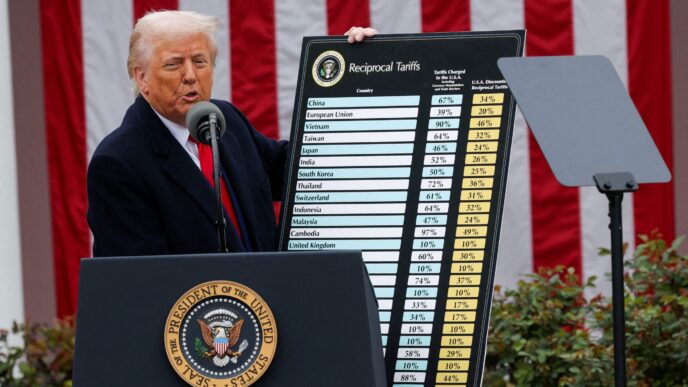
- Fragmented Trade Rules: The WTO’s authority has diminished, replaced by regional or issue-specific trade regimes. Competing standards – whether in digital services, ESG reporting, or carbon tariffs – force companies to adapt operations market by market. Efficiency gains from global scale are giving way to costs of regulatory divergence.
- Weaponised Interdependence: The report highlights how interdependence, once assumed to promote stability, is now weaponised. Energy, food, and technology supply chains have become tools of coercion. Russia’s manipulation of energy flows, China’s rare earth policies, and Western export controls on semiconductors illustrate how critical dependencies can be exploited.
- Financial and Currency Risks: The dollar remains dominant, but efforts to build alternative payment systems and diversify reserves reflect a world hedging against US financial primacy. For multinational firms, this raises exposure to sanctions regimes and complicates cross-border finance.
Why Business Cannot Look Away
Some executives still see geopolitics as outside their remit – a risk to be monitored but not integrated into strategy. Multipolarization renders this mindset obsolete. When governments can suddenly weaponise supply chains, or when a market’s regulatory alignment shifts overnight, geopolitics becomes a direct driver of corporate performance.
Three lessons stand out:
- Volatility is structural, not cyclical. The turbulence of recent years is not an aberration but the new baseline.
- No market is neutral. Every jurisdiction is pressured to take sides – or to leverage its position across multiple blocs.
- Resilience must replace efficiency as the organising principle. Just-in-time, single-source, cost-minimised models are liabilities in a multipolar world.
From Risk to Strategy
What, then, should business leaders do?
- Integrate foresight into governance. Scenario planning must include not only economic cycles but also geopolitical alignments. Boards should stress-test strategies against divergent futures, from decoupling to regionalisation.
- Diversify dependencies. Companies must move beyond efficiency-driven concentration of suppliers and markets. Multipolarization rewards redundancy and optionality.
- Build political intelligence. Corporate diplomacy – understanding the interests of multiple governments, engaging with regulators, and shaping standards – is becoming a core competence.
- Protect reputation. In a fragmented world, being seen as aligned with one bloc can alienate others. Multinationals must balance communications carefully, ensuring consistency with corporate values while managing sensitivities across markets.
Embracing Complexity
Multipolarization signals the end of predictability in global business. The neat certainties of unipolar or bipolar systems have given way to a fractured landscape of shifting alliances and weaponised interdependence. For business leaders, the challenge is not to avoid this complexity but to embrace it – building organisations capable of adaptation, foresight, and trust-building.
The Munich Security Conference is clear: multipolarization is here to stay. For companies, the choice is equally clear. Either treat geopolitics as noise and risk being blindsided, or integrate it into strategy and turn resilience into competitive advantage.
Next in the series: We examine how fragmented trade and regulation are reshaping global business – and why companies must adopt multi-regulatory strategies to stay ahead.